Tags

  • Published on

    Thoughts On Equality In Sport!

    Picture
    Image description
    Is sport as diverse as it can be and is it a level playing field (no pun intended) for all who participate?

    It is an interesting question and something I’ve been reflecting on after watching a few TedTalks and some of the reading I’ve been doing recently. If we look at running as an example, men and women at a professional or elite level don’t compete together within the events they participate in. I looked at the world records for some of the track events – the current world record for the men’s 100 m is 9.58 seconds, whereas the women’s record is 10.49 seconds (that time would not have gained a qualification to the men’s 100 m final at the last Olympic Games in Rio). The figures and differences follow a similar trend as you look at 200 m, 400 m, 800 m, and so on.

    Where this trends starts to drift is at marathon distance and beyond. There was no official women’s marathon at the Olympic Games until 1984!!!! Women had competed occasionally, but it wasn’t fully recognised. It wasn’t until the late 1960’s that women were permitted to run in marathons as elite athletes. This is staggering really as the evidence suggests that women are able to compete with men on an almost equal footing when the distances increase.

    I did a presentation in work about 6 years ago as part of a course on the cyclist Beryl Burton (“Who?” you are probably thinking – and no one attending the course had heard of her either). Beryl Burton was a phenomenal athlete who held multiple national records in an amateur career that spanned 4 decades as well as winning multiple national and world titles. The most remarkable title she held was the national 12-hour time trial championship in 1967 where she rode 277.25miles. She beat all the men taking part and held the national record (for both men and women – the women’s record stood until 2017!!!!!!) I’m still of the opinion that had women been able to compete in track cycling at the Olympic Games whilst Burton was still riding she would be our most decorated Olympian – however, very few people outside of cycling have ever heard of her.
     
    Within Ultra-distance running women are not only competing but are also winning events outright. Pam Reed won the Badwater Ultra in 2002 (this is considered to be one of the toughest footraces on the planet – 135miles through Death Valley!!) beating the first man home by over 4 hours and 30 minutes. It wasn’t a fluke either because the following year she repeated this by beating the first man to finish by 25 minutes (and that man was Dean Karnazes – one of the best male ultra-runners in the world!).
    Mimi Anderson has also won multiple races outright as have multiple other female ultra-runners, but very rarely do we hear about it. Jasmin Paris made national headlines and received much media coverage in 2019 after winning the 2019 Spine Race (268miles along the Pennine Way).
     
    There have been multiple studies and much research into why women are able to compete almost equally with men at ultra-endurance events – physiology and how the body uses fuel, pain threshold differences, mental strength, and ego-check (men are more likely to go at a much faster at the start and suffer for it later).

    Interestingly, when looking at separate race divisions for male and female competitors the organiser of the Big’s Backyard Ultra (Gary Cantrell (aka Lazarus Lake) – the creator of the infamously tough Barkley Marathons – a race so tough that only 18 runners have completed the full course since 1986!!!!) decided to scrap the separate male and female divisions – in 2019 a woman won the event overall.
     
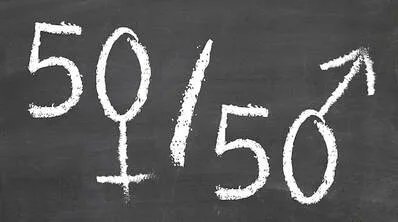
    Outside ultra-running very few athletes get the media coverage they sometimes deserve for their achievements – now imagine if a woman was to win a mixed 100 m final at the Olympics and the media coverage that would receive. Imagine how inspiring and empowering that would be, especially for younger female athletes. I think it is a shame when we are looking at equality and role-modelling in sport that it is not as balanced as it could be and creating that environment where participation should be based upon ability and not gender.

    Picture
    Picture
  • Published on

    Total Focus

    Picture
    Saturday was another long run; 20.2 miles and it was made that little more challenging by the weather. Rain and a very strong breeze. It was good to get the session done in those conditions as I must really focus on why I’m out there. It can be easy to pick the pace up when you are being pushed by a strong tailwind, however caution is required as that tailwind will be a headwind on the return, and this requires even more patience and energy. If you’re spent at the halfway point, then it is going to be a world of pain on the return.

    I’ve reached that part of my training schedule where nothing but total focus is needed. I can’t and won’t take my foot off the gas now. I’ve spent months training to get to this point and I just need to keep this going for another couple of months.

    I’ve reached that part of my training schedule where the long runs are becoming the norm. Between now and the Serpent Trail 50k I have 4 more runs of over 20 miles to complete plus another 2 of 18 miles. In between those longer runs I have the normal runs I do of around 6-12 miles. I have another 23 runs sessions to complete.

    The mileage is really starting to ramp up now. This is the stage of the training I’ve been looking forward to. This is the stage of the training where I need to work the hardest and focus the most. This is the stage of the training where it gets tough, and I know I will need to dig deep at times to keep moving forwards. I enjoy that part of training. It is when you reach that point where your mind is telling you to quit, where your mind is telling you your body is aching and in pain and the way to stop that is to quit or rest. This is when the training gets interesting, and I know if I can endure those sessions then I have that focus to complete the ultra.

    Total focus and nothing else.

    I’m not really paying much attention to the outside world at present and don’t feel I need to. I’m busy in work, I’m busy with study, I’m busy with some other work-related projects, I spend a lot of time reading (I’ve already read 20 books this year), occasionally I’ll watch a film or a documentary on ultra-running, and the rest of the time is taken up with training or recovering from training.

    Both the preparation for training and recovery are vitally important. My diet has changed this year, and I’m more aware of the food that I eat needs to give me the fuel I need to complete the sessions as well as recover from them. There are foods I’ve completely cut out of my diet and foods that I am eating a lot more.

    I’ve realised the importance of adding in core work to supplement my training and I think this has been beneficial, especially on the longer run sessions.

    I’ve got just under 8 weeks to go until I stand on the start line for the Serpent Trail 50k ultra. I know that by giving it my total focus, like I have done since I started training for the event, for the next 8 weeks I will be ready to give it everything I have, both physically and mentally to cross that finish line. I will have the miles in my legs and know I have done the training required, I will have my nutrition plan correct,  I will have the belief that I’m good enough to be taking part, I will have the belief that nothing along that trail will stop me getting to that finish line, I will have the belief that I can overcome any negative self-dialogue that tells me I’m not strong enough, I will know that I will have total focus and nothing less.


    Picture
    Picture
  • Published on

    The Numbers Game!

    Picture
    Today is 3rd May 2021 and 2 months to go until the Serpent Trail 50k.

    So far this year I’ve completed 105 training sessions. I’ve completed 52 sessions on the bike trainer and 53 runs. I’ve not missed a single session this year. I’ve already run 381.53 miles this year which is further than my entire total for 2020 which was 355.04 miles. I’ve not got a target for distance running in 2021 and am just clocking the miles up.

    0520 is the time my alarm goes off twice a week, so I can get out for a run before starting work. I used to hate having to get up early and train but nowadays, it doesn’t bother me in the slightest, if anything I look forward to it.

    There are 1,510 tracks on my MP3 player (and I still have a fair few more to add on) – when out running I try and name the track as soon as possible, there is some stuff I have no idea who it is!!!! The selection of music, genres, and artists is eclectic to put it mildly. I’ve got into the habit of singing along to one song on my longer runs, I try not to look at people when I pass them as I howl along tunelessly to ‘Bomber’ by Motorhead. There are exactly zero songs by Bon Jovi or Nickelback – they have zero place on any track list………. ever. I’ve stopped picking up the pace whenever a track by Slayer comes on – the long runs are not the time for that game anymore!

    The Serpent Trail 50k will be the first race I’ve done for a while. I think my last race was a Park Run 5k just over 4 years ago. I’ve no idea how many races I’ve done in total over the years – there are probably some I’ve forgotten about completely.

    After the Serpent Trail the focus shifts to the Great South Run and then the Portsmouth Coastal Marathon. The marathon will be the 10th marathon I’ve run – it will be a relief to get into double figures as it has been bugging me for years. The last marathon I ran was in Valencia in 2008.

    I have a feeling the Serpent Trail 50k won’t be the only ultra-marathon I run. I’ve no idea how quickly I’m going to run it. The main aim is to cross the finish line, but I’ll be happy to finish in 6 hours (which is an average pace of 11:35 min/mile), I’ll be delighted with a time of 5:30 (which is an average pace of 10:37 min/mile) – most of my training runs have been anywhere between 8:30 min/mile to just under 10:00 min/mile. On the day, I need to keep my ego well in check and realise that it could be a world of pain from mile 23 onwards – this is where it is going to get interesting and it becomes more of a mental rather than physical effort.

    I still have a lot of training to do and my longest run will be 26-28 miles – that’ll give me a more accurate idea of what I’m capable of finishing the event in, but experience tells me anything can happen on the day. I’ve already accumulated 5 blisters from my longer runs and have lost two toe-nails – it comes with the territory.

    I usually have to check 7-8 times before the closing the front door that I have actually got my keys! I recently bought a new pair of trail running shorts which cost more than the last pair of jeans I bought – I sometimes wonder if I have got my perspectives correct. Then again I own more pairs of running shoes than I do normal shoes.

    I’m planning to do a two-week taper in the lead up to the event – the number of sessions will be the same, but the volume drops considerably. I don’t enjoy the taper phase as I feel lazy and worry about slight tweaks and twangs in my muscles being impending injuries.

    I’m trying hard not to eat my own body weight each week in home-made energy bars. I’ve watched countless documentaries on ultra-running and am baffled on how someone can run 100 miles at 8:30 min/mile pace - off-road and up and down mountain trails!

    I’m 50 years of age in a few months’ time and never in my wildest imagination did I think I’d be training for an ultra-marathon. Then again I’ve never been one to limit their possibilities and that is the number one thing – don’t limit your possibilities.


    Picture
    Picture
  • Published on

    Measurement of Success!

    Picture
    Image description
    What is success?

    I reflected on this question over the weekend. It is hard to define success, and it is subjective to what you are trying to achieve. How we individually view success is very subjective as well. Some define success in terms of acquisition and material possessions. Others define success in terms of status and wealth. Some may define success as the outcome of a target or goal they are working towards. I looked at some of the goals and targets I am working towards this year and re-evaluated them in terms of what is success. Did merely ticking them all off mean that I’ve had a successful year?

    I looked at my training for the ultra and looked at whether it had been a success or not.
    I really broke this down into much smaller components. Firstly, I had identified something I wanted to achieve – finish an ultra-marathon. It has been something I’ve wanted to do for a number of years and despite a few previous unsuccessful attempts I feel that I’ve got my act together this year and because of the training and commitment I’ve put in I am going to achieve that goal.

    Has the training been a success so far though? I’ve completed every session I’ve scheduled in this year (at the time of writing that is 98 training sessions). This is two-fold though – the planning can be a success but not necessarily the execution of that plan. I’ve spent time building up the distance and time so that every session is working towards building the endurance I need to finish the ultra.

    At the weekend I did another long run (21.1 miles) and in terms of that session it was a success – my pace was consistent, the kit I used was suited to the purpose and worked really well, my nutrition was correct, and my focus was exceptional. I can’t pin-point one area of that session that did not go to plan. Compared to the previous weeks long run it was a much better run – whereas the previous week the last 3 miles were a slog this week I felt strong in the last 3 miles. I was mentally prepared for hitting a mental dip in places and knew how to overcome this and knew that physically I was able to move forwards.

    But there is going to be a huge difference from finishing a 21.1mile training run and finishing a 31-mile event. Therefore, the sessions will get longer and the parameters of success will change – sometimes it isn’t just about the physical element or distance covered but the mental element as well – that ability to shut out the negative inner dialogue, to carry on when the mind is saying stop.

    It got me thinking about what will I deem as being a success on the day of the ultra in just over 2 months’ time. Is just crossing the finish line going to be a success? In terms of achieving the overall goal it is, but other elements will also come into play. I’ve not got a specific time I’m aiming for – at present that is a bit of an unknown, and I’m only just scratching the surface in terms of distance. I’ll have a much better idea in the coming month as I work towards a long run training run of 26-28 miles.

    Success on the day will also need to factor in how I handle things not going to plan and how I overcome these challenges. I know there is a good chance I will have an existential crisis during the event asking myself - Why the hell I’m doing this? What am I trying to prove? Why did I think this was a good idea? Being able to overcome my mental demons will be key to success.

    Success will be sticking rigidly to my nutrition plan and fuelling properly before the event and during the event. Success will be standing on that start line, knowing I’ve done everything I needed to do to make sure that 31 miles later I am crossing that finish line, that I have done all the training required. There will be a certain amount of satisfaction in crossing that finish line and how I answer those questions of what I define as success will hopefully have been answered along the way.

    Having completed in many, many endurance events over the years I know that after the event in the coming days and weeks many questions will arise – could I have done things differently? Could I have gone quicker? Could I find a different event with a more challenging terrain? Could I do a longer distance - 50 miles? 100km? 100miles?
    Then the measurement of success changes yet again.

    One thing I am learning is that the measurement of success isn’t always about achieving the goal or the target but the learning that takes place on the way to achieving it.

    Picture
    Picture
  • Published on

    An Endurance Journey!

    Picture
    I completed a run of just over 20 miles on Saturday. It has been quite a few years since I’ve done that distance. It was good despite the last 3 miles being a bit of a slog and I had to dig deep a few times to keep going. I didn’t give up, felt motivated, and was fully focused on getting that distance completed.

    It got me to thinking about why I enjoy endurance sports and where that interest comes from.

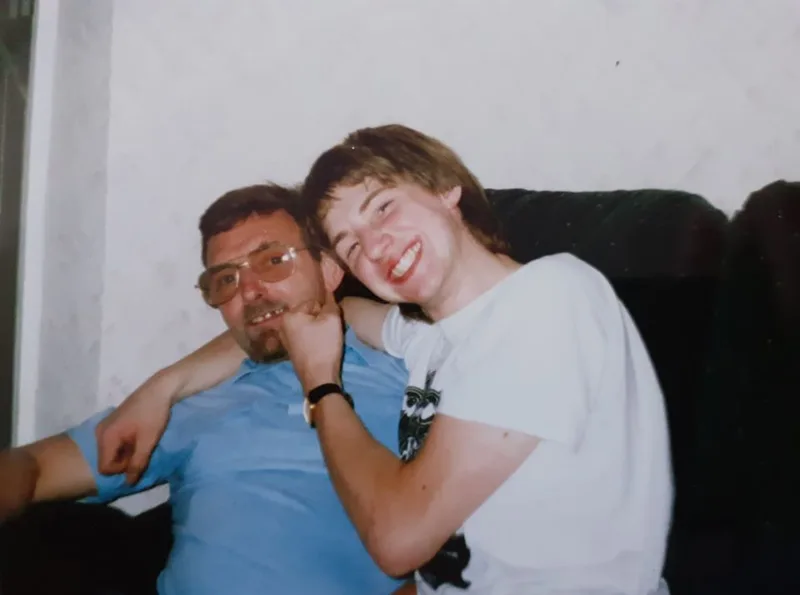
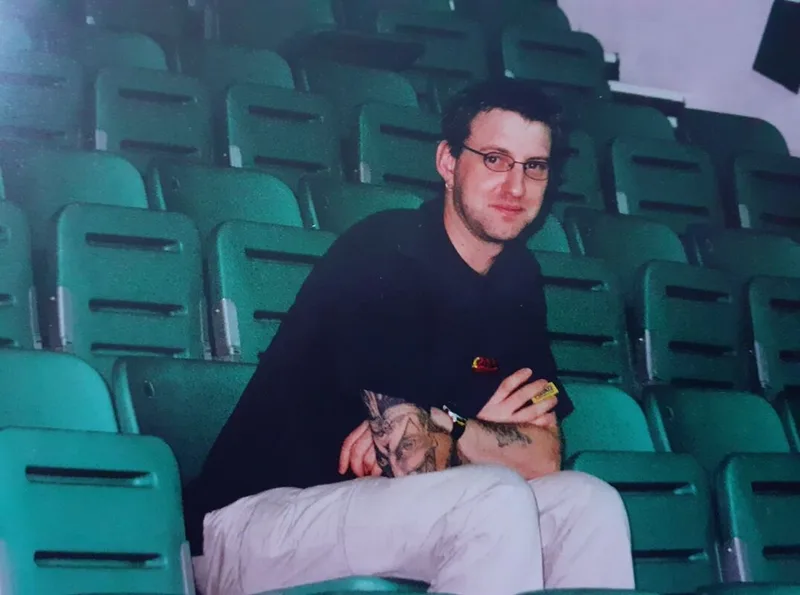
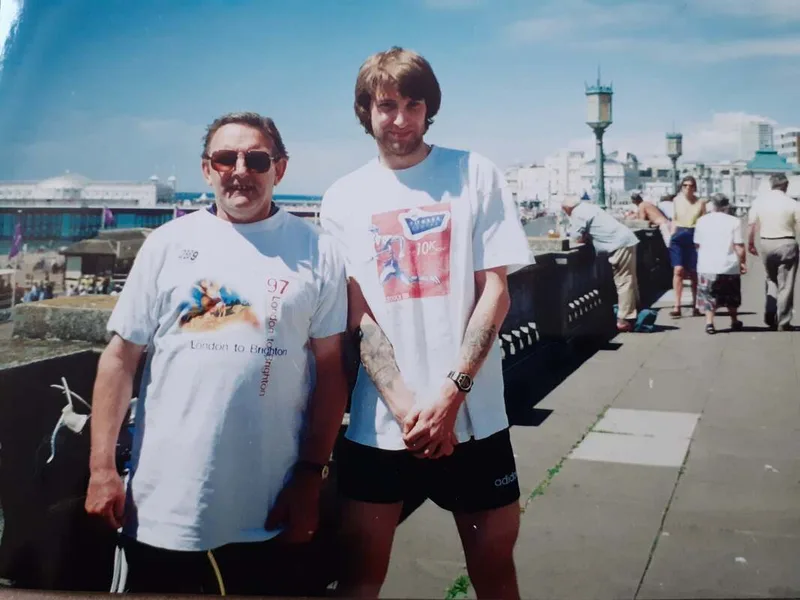
    I saw my Mum on Sunday, and she had found some old photos for me (some of which I had forgotten about) – some of those may answer the question of why I enjoy endurance events.

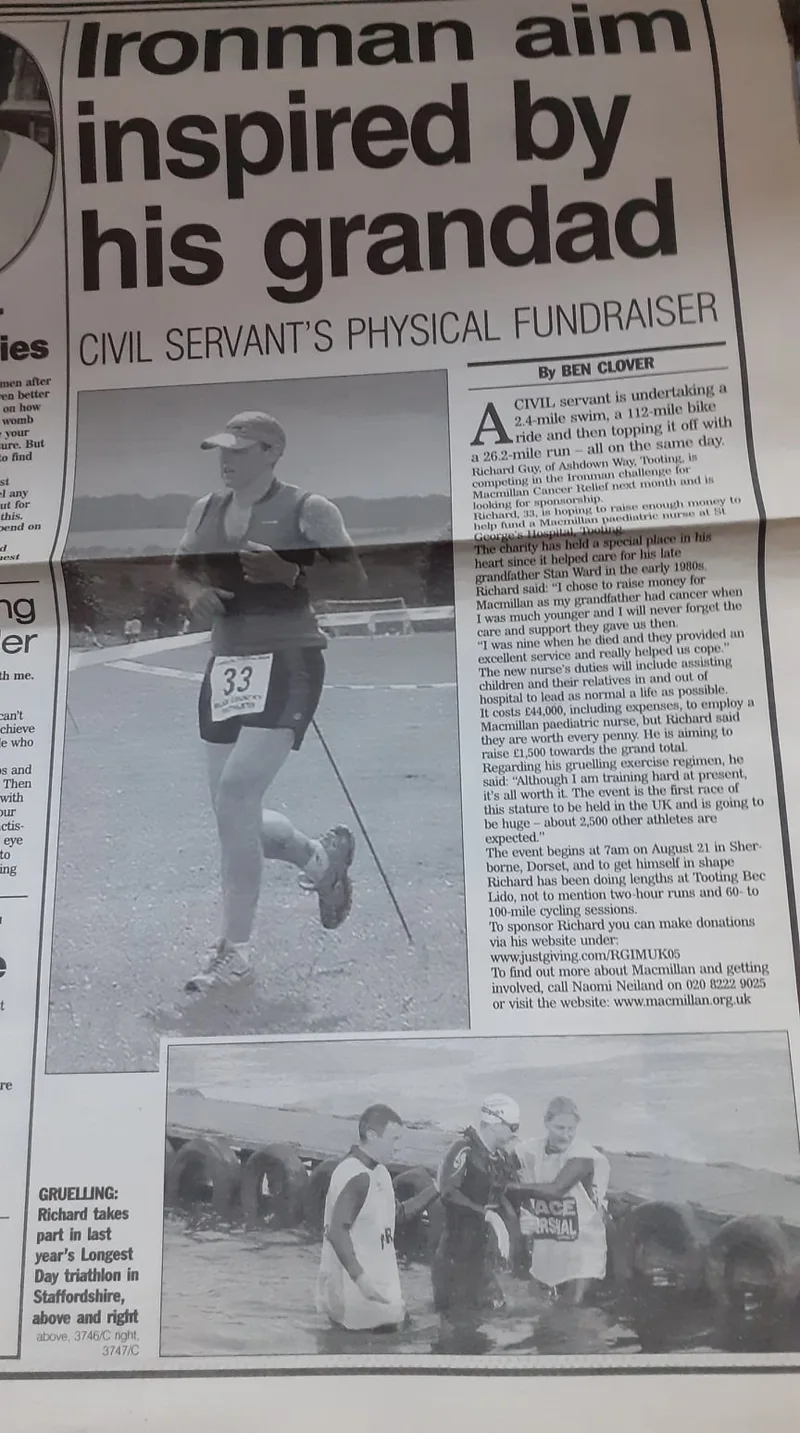
    I did my first triathlon 25 years ago. Back then very few people took part in the sport and my training was very much trial and error. Back then the internet didn’t exist, so my main points of reference were a book I had bought about triathlon (which wasn’t a huge help) and a few copies of Triathlon magazine (not a great deal of help either as it focused on what races some of the elite had done and what was happening in the USA). I trained for a few months and just hoped for the best on the day.

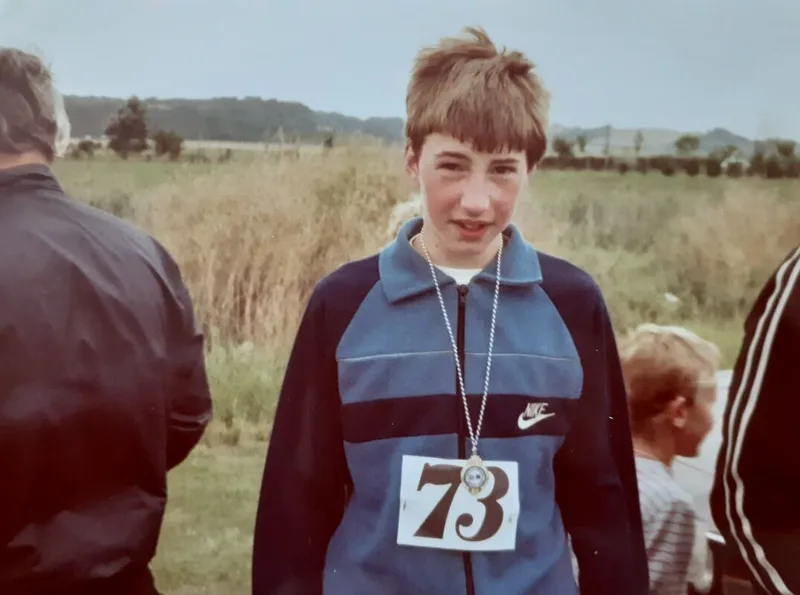
    Looking at those photos on Sunday made me realise that my interest in endurance sports developed years before. There is one photo of me when I’m about 10 years of age having just finished a cross-country fun-run with my first finishers medal around my neck.

    My Dad was into cycling and as a teenager I did a few charity rides with him – usually around 50-60 miles (which is a decent distance for a 14-year-old to ride. And looking at one of those photos and how skinny my legs look (!!!) I’m somewhat shocked I was able to ride those distances at that age). This led to being interested in races like the Tour de France (years before Britain even had a winner of the event – just having a British rider on the start line was a huge deal back then).

    At school I played football, rugby, (hated cricket), and swam. I was OK, nothing exceptional. Outside of school I canoed for a little while (as part of my Duke of Edinburgh bronze award). I tried out a few other sports as well – again nothing really stuck in terms of wanting to participate long term. I went on a couple of outward bounds trips with the school to the Lake District and for a kid growing up in London that was a real eye-opener. The open space, the hills, the vastness of the place, and the sense of achievement making it up some of the mountains.

    I remember going to watch the first ever London Marathon with my Nan in 1981. We stood outside Embankment station cheering and clapping the runners on, and I remember saying to my Nan that I would run a marathon one day (and probably didn’t realise what was involved, it just looked pretty cool to me).

    I never joined any cycling or athletics clubs as a kid and at school there was never really that interest or encouragement from teachers to pursue any sports outside of school. I remember watching various sports programmes as a kid and that is where some of that interest really developed – city centre cycling shown on Channel Four, very brief highlights (2-5 minutes) of the Ironman in Hawaii, the Olympic Games in Moscow and Los Angeles (1980 and 1984).

    When I was growing up there was a bloke who lived on the same estate who was a long distance runner and as kids we thought he was Superman!!!! We'd see him run off and then hours later (whilst we were still playing football and hitting windows he'd return, and we'd be amazed at how far he'd run!) All of those things have contributed in a small way to the journey I have been on in terms of endurance sports. All of those things have had a lasting influence on this journey.

    There have been times when I’ve not entered events for a couple of years and just trained with no end goal or main purpose – but something has always drawn me back into finding an event, entering it, putting in the training, completing it and moving onto the next goal.

    When I completed my first triathlon 25 years ago I wanted to see what else I could achieve and over the years went from short distance events to much longer distance events. When I completed my first marathon in 1998, once my legs had recovered, I wanted to see if I could get quicker over the distance.

    I remember speaking to people that took part in ultra-marathons (and also reading a few books about the sport) thinking that is unbelievable and not for me, way too far. I think deep down I’ve always looked to push myself on my terms on what I can achieve. Taking part in endurance sports allows me to do that, and it has been an incredible journey and one where I have learnt a lot about myself. Pushing myself out of my comfort zone and seeing what is beyond that – both physically and mentally.

    I look at that photo of me as a 10-year-old with that finishers' medal around my neck and wonder if someone told me then that in 40 years’ time I would be training to run 50 km what my reaction would have been.

    Every time I think that the journey is complete there has always been something else that has drawn me back in, motivated me, fuelled that curiosity, made me wonder ‘what if’, and given me another goal to work towards.


    Picture
    Picture
  • Published on

    In The Moment!

    Picture
    Image description
    Saturday provided me another opportunity for a long run, and it was a 15-mile session with a decent amount of off-road terrain. I’m enjoying the long runs, even more so when they are off-road. The long runs are providing me that opportunity to test out kit (this week was my new trail running shoes – perfect) and nutrition (again worked well, combination of energy drink, gels, and salt-chews to make sure my electrolytes are in balance).

    Another way that the long runs help is with focus and this week I found that to be a lot sharper. I’d done some work for my external study (more on that in a bit) on mindfulness and ‘being in the moment’. I had a rough idea of the distance I wanted to cover on Saturday and the route. I just focused on what was in front of me there and then. I didn’t focus on the miles I’d just done or the miles ahead of me either (neither of which I can have any amount of influence over). Instead, I just concentrated on the there and then, nothing else.

    I think that it is vitally important to put this type of training into practice in the build up to the ultra. Like the physical aspect, like getting my nutrition spot on, and like using the correct kit if my head and focus are in the right place that is going to count for a lot.

    I’ve watched a few documentaries recently on ultra-distancing running and one of the things that is constantly mentioned is the mental aspect – having your head in the right place throughout. And these athletes are racing some very tough events (Badwater 135, Barkley Marathons, Hardrock 100, and Western States 100), much tougher than the 50k ultra I’m training for but that mental aspect is of the same importance.

    The more I can focus, in training, on 'being in the moment,' the more beneficial it is going to be on the day. I’m covering the miles I need to do in training but if my focus and belief is not there then those miles count for nothing because when the going gets tough the focus will not be 'in the moment,' the 'there and then,' it will be on the miles I have ahead of me (and I can’t do a thing about that), it will be on things I can’t control, it will be those niggling little doubts.
     
    There was another plus point that happened in the week as well – 12 week review with my tutor for my external study. I’d submitted around 6 pieces of work which hadn’t been marked or signed off just prior to the meeting. I was a slightly concerned and didn’t fancy the prospect of spending a few evenings making changes, rewriting parts and having to resubmit the work. There were also some doubts around whether I was good enough to be doing the study in the first place (again the imposter syndrome rearing its head to put those doubts in my mind once more).

    The meeting went well. I’m ahead of schedule, the quality of my work is outstanding, I am showing a great understanding of the subject matter and how I am applying it. If anything, I’m doing work that I’m not evidencing, and I was told to include this as well. It was quite a relief but also highlighted that those self-doubts are still there but more importantly when I knuckle down what I can achieve.

    I don’t always give myself enough credit for what I have and do achieve (I tend to focus more on what else I can do, what more needs to be done, or my personal favourite of what more I could have done – and this is almost belittling my achievements).

    This was highlighted during the week when I was giving someone some advice on different aspects of run training – I didn’t think a great deal about it in the grand scheme of things and gave some advice based on personal experience over the years, what has worked well and what hasn’t, and a few other observations. I also wondered why they were asking me – and someone told me (because I don’t see it myself). I have a wealth of knowledge and experience of training for and competing in endurance events. Most people would be happy with finishing one marathon, I’ve finished 9 (and am planning to do a few more), most people would be happy to finish one triathlon, I’ve finished more than I care to remember including 4 Ironman distance and also raced for Great Britain. I don’t tend to place on a lot of emphasis on what I have achieved, the emphasis seems to be what I want to achieve or what I could have done better.

    I remember over the years seeking advice from people with much more experience and knowledge of training and racing and being in awe of what they had achieved. Maybe, just maybe I’m now in that position myself?

    Picture
    Picture