Who told you that you need to feel the way you are feeling? Is there an expectation that you need to be the strong one all the time, that any chinks in the armour will leave you appearing as being weak? What is the impact of not being the strong person all the time?
I’ve been doing some reading and research for my role in work around well-being, mental health, how things like PTSD, stress, anxiety, and depression affect people even when they need to be mentally strong (especially in their peer group which can then effect their status within that group), and the link to our own emotional intelligence.
It is perfectly OK and perfectly normal not to be OK sometimes. We are in a third lockdown, it is sucking the fun out of life for many. Plans go out of the window, circumstances change (or is some cases don’t, causing a sense of monotony), socialising isn’t happening, we are limited in the things we are allowed to do, some are suffering from ‘cabin fever’ by being stuck indoors all the time (which is made even worse by the winter conditions and a more transmissible variant of the virus), and it can sometimes be frustrating with a routine of wake, work, sleep, repeat.
We’ve been through lockdown before and the novelty factor has worn very, very thin for most. Sensibly the government and scientists haven’t put a timeframe on this one as they had with the initial one (12 weeks at maximum I believe) – though that in itself can be a double-edged sword – by not putting a time-frame on the lockdown they are not giving unrealistic expectations but on the flip side we have no indication when the lockdown will lift. That is going to affect people and moods can change daily and weekly due to it.
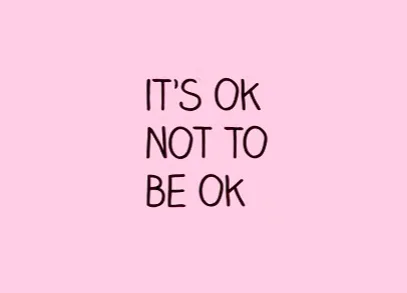
It is OK not to be OK sometimes. We can all feel low, especially in winter. This winter now has the added challenge of the lockdown. It is OK not to be strong all the time, every minute of the day, 24/7. The way that we manage both our moods and emotions is vital to our individual well-being. Having that awareness of how we are feeling or how we might feel. Acknowledging that we are not always going to be our normal, fully energised, super-selves and there are going to be times when our energy levels and moods are low. If we feel guilty about not feeling our best, our moods and emotions are only going to remain negative and lead us into a downwards spiral and that may be difficult to get ourselves out of in the longer term.
Having an awareness of what is triggering these moods or emotions is important – it could be focusing on the things that we are not able to do, it could be constant news coverage on the pandemic, or it could be the monotony of the lockdown restrictions – wake, work, sleep, repeat. Ask yourself how many of these you can control or influence – not many is probably the answer. Focus on what you can control, what you are able to influence, and what matters – control the controllable. Acknowledge that you are not always going to be at your best and accept that, don’t be too hard on yourself, and be kind to yourself.
Do things that are going to make you happy. Do things that are going to have a positive effect on your emotions. Keep a mood tracker – record your mood at lunchtime and at night, are there patterns emerging? What can you do to change those patterns if you are not happy with them?
What can you do to be kind to yourself?
I’ve been doing some reading and research for my role in work around well-being, mental health, how things like PTSD, stress, anxiety, and depression affect people even when they need to be mentally strong (especially in their peer group which can then effect their status within that group), and the link to our own emotional intelligence.
It is perfectly OK and perfectly normal not to be OK sometimes. We are in a third lockdown, it is sucking the fun out of life for many. Plans go out of the window, circumstances change (or is some cases don’t, causing a sense of monotony), socialising isn’t happening, we are limited in the things we are allowed to do, some are suffering from ‘cabin fever’ by being stuck indoors all the time (which is made even worse by the winter conditions and a more transmissible variant of the virus), and it can sometimes be frustrating with a routine of wake, work, sleep, repeat.
We’ve been through lockdown before and the novelty factor has worn very, very thin for most. Sensibly the government and scientists haven’t put a timeframe on this one as they had with the initial one (12 weeks at maximum I believe) – though that in itself can be a double-edged sword – by not putting a time-frame on the lockdown they are not giving unrealistic expectations but on the flip side we have no indication when the lockdown will lift. That is going to affect people and moods can change daily and weekly due to it.
It is OK not to be OK sometimes. We can all feel low, especially in winter. This winter now has the added challenge of the lockdown. It is OK not to be strong all the time, every minute of the day, 24/7. The way that we manage both our moods and emotions is vital to our individual well-being. Having that awareness of how we are feeling or how we might feel. Acknowledging that we are not always going to be our normal, fully energised, super-selves and there are going to be times when our energy levels and moods are low. If we feel guilty about not feeling our best, our moods and emotions are only going to remain negative and lead us into a downwards spiral and that may be difficult to get ourselves out of in the longer term.
Having an awareness of what is triggering these moods or emotions is important – it could be focusing on the things that we are not able to do, it could be constant news coverage on the pandemic, or it could be the monotony of the lockdown restrictions – wake, work, sleep, repeat. Ask yourself how many of these you can control or influence – not many is probably the answer. Focus on what you can control, what you are able to influence, and what matters – control the controllable. Acknowledge that you are not always going to be at your best and accept that, don’t be too hard on yourself, and be kind to yourself.
Do things that are going to make you happy. Do things that are going to have a positive effect on your emotions. Keep a mood tracker – record your mood at lunchtime and at night, are there patterns emerging? What can you do to change those patterns if you are not happy with them?
What can you do to be kind to yourself?